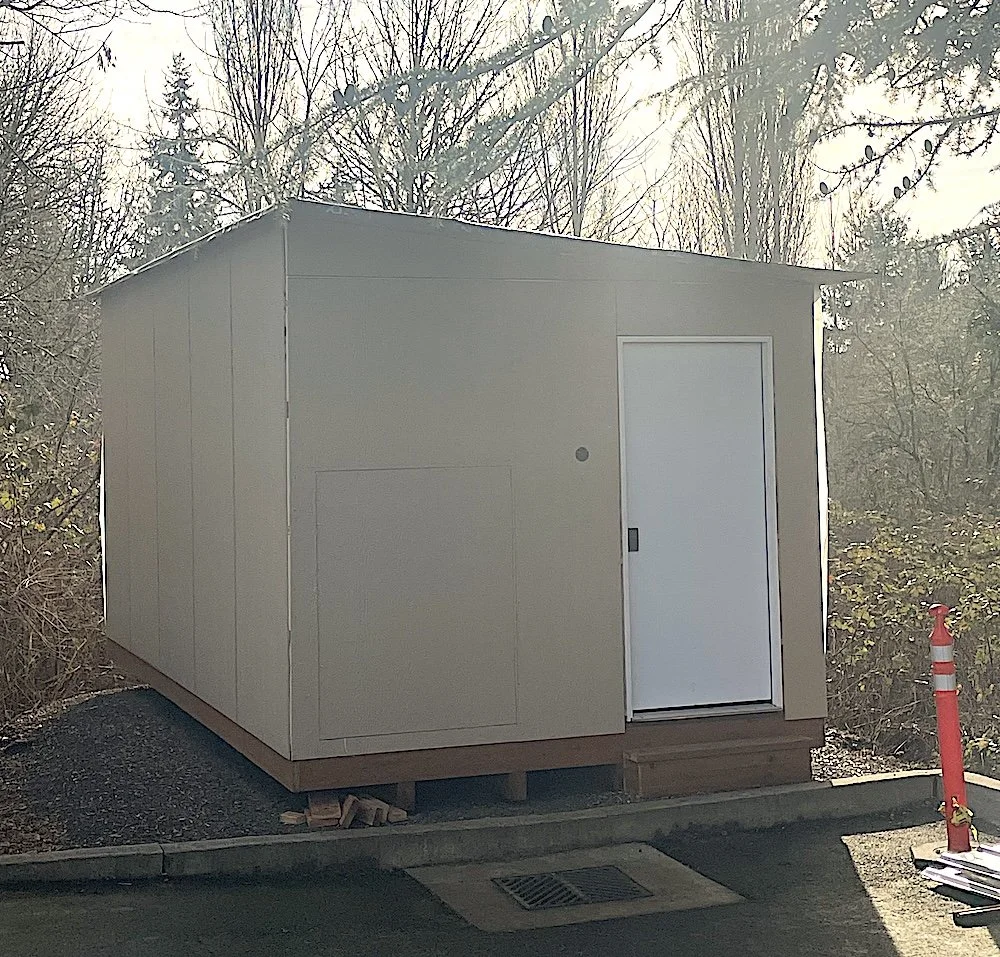
Presenting the Fort Ward Shed Mahal
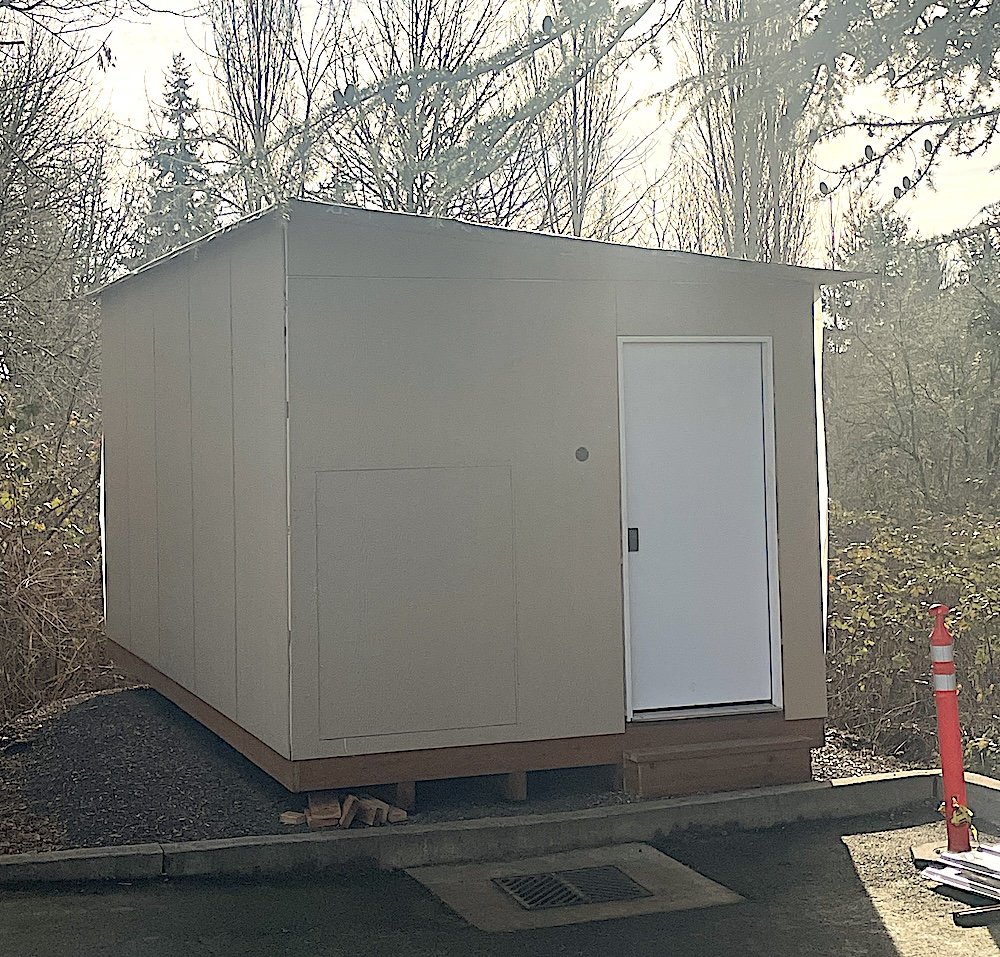
In a large-scale earthquake, the South End is likely to be cut off from the rest of the Island, and residents there want to make sure they will have access to key emergency supplies so they can manage for weeks or longer until roads can be cleared. The local South End community fundraised for materials, and right before the New Year about a dozen people helped build and load a storage shed next to the Fort Ward Community Hall Disaster Hub.
One South End resident said that it was “just a shed, not even the Shed Mahal.” But in so doing, he made sure that it will forever be known as the Shed Mahal.
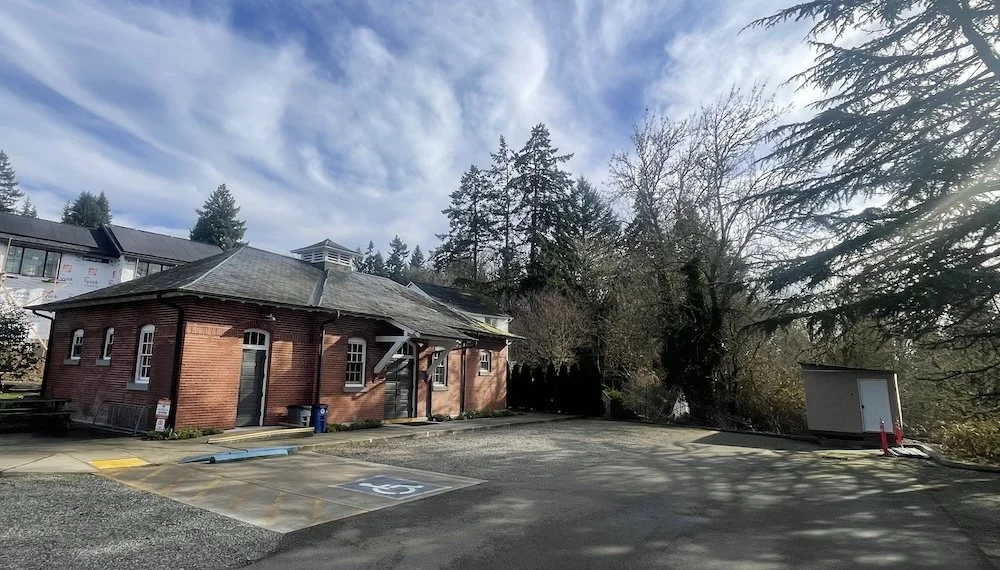
The Fort Ward Community Hall Disaster Hub and shed
What Makes This Shed So Special?
The Fort Ward Shed, at 10 feet by 20 feet, is about 30 percent bigger than the standard trailers stored at the other Disaster Hubs around the Island. It needs to be that big as only two Disaster Hubs currently serve the South End: The Fort Ward Hub and the Hub at Hyla School.
This shed is more secure than trailers—it is unlikely to be towed away or broken into. It is also easier to maintain because it has no tires. And it is cheaper—the up-front cost was lower than the price of a trailer, and there are no annual registration fees.
The shed includes storage racks, electrical wiring and lighting, a power bank plugin, and weatherproofing.
What’s the Backstory?
The Fort Ward community had been fundraising to purchase emergency supplies and needed a place to store them. But trailers are expensive to buy and expensive to maintain, and there weren't enough funds to invest in one.
City of Bainbridge Island Emergency Manager Anne LeSage knew that the Senior Center had a shed instead of a container for its supplies, so she contacted the builder and got a quote on the materials. Pascal Schuback, the Bainbridge Prepares Program Director, offered to build the shed by enlisting the help of a few volunteers. Anne still had funds in her budget toward the end of the year that she could allocate to purchasing the shed materials.
David Harry of the Bainbridge Island Metro Parks and Recreation District installed a gravel pad, and Pascal and his team started work.
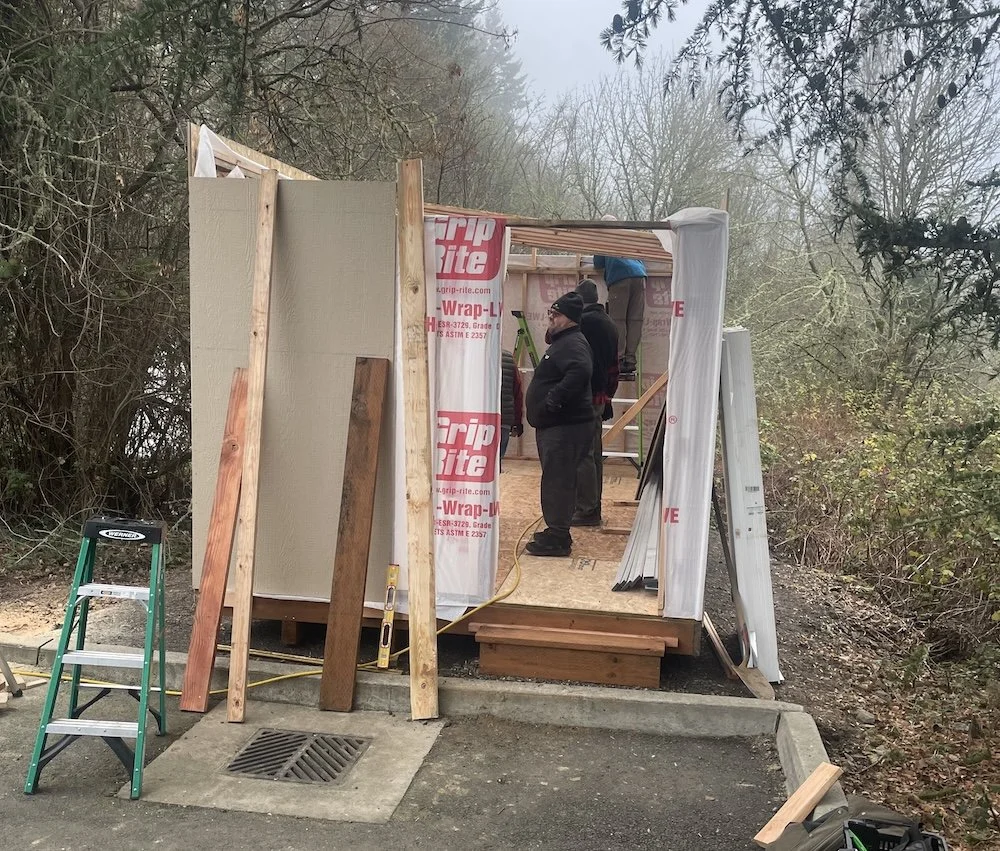
The volunteer construction crew at work on the interior.
How Was It Built?
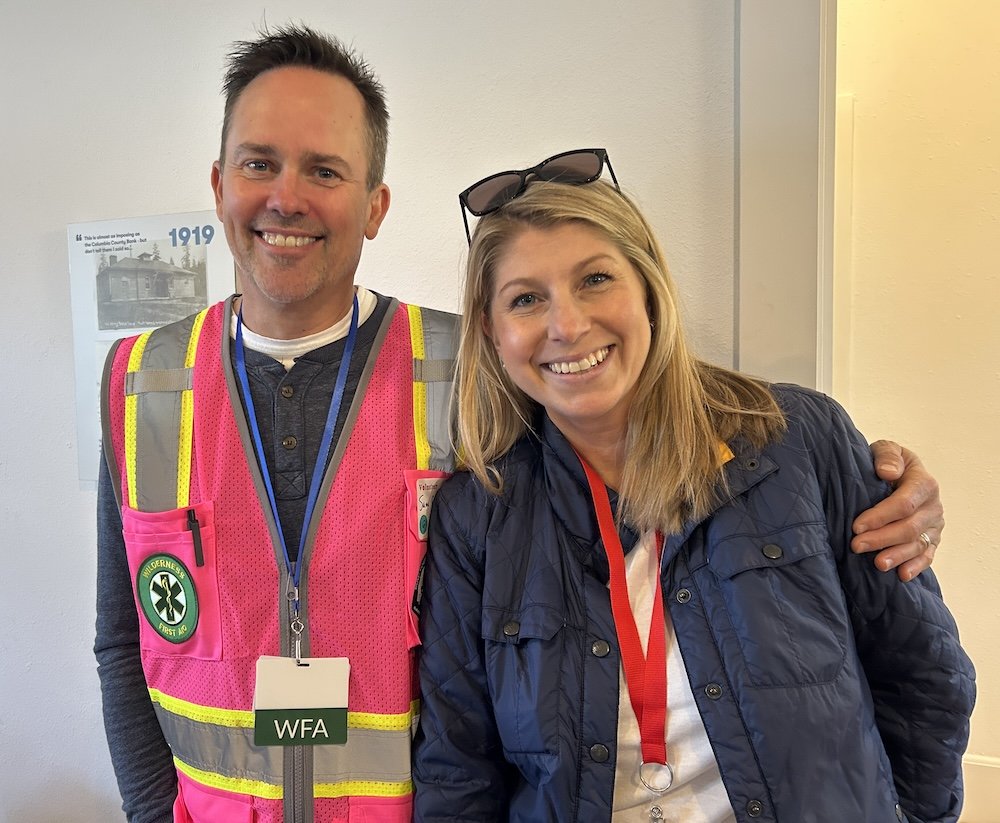
Pascal was the architect, planner, procurement officer, and main building lead for the project. He was assisted by seven volunteers. The equipment and supplies team was made up of five Fort Ward residents. The construction project lasted about three weeks.
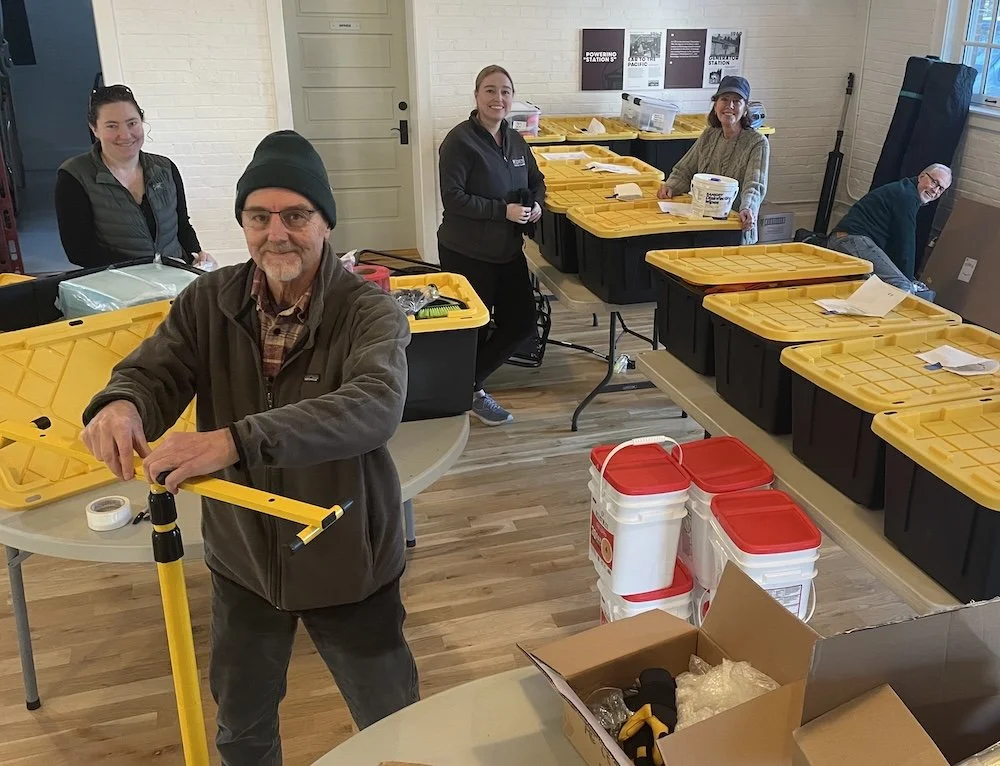
The equipment and supplies crew filling tubs with supplies.
What’s Inside?
The shed contains standard emergency supplies: medical, communications, food, water, and power. It also includes a bike trailer to help with distribution.
How Will the Shed Be Used?
In an emergency, the shed can be emptied and then repurposed for medical care, communications, or shelter depending on whether the For Ward Community Hall is operational or damaged.