How to Increase Your Resilience in 2026
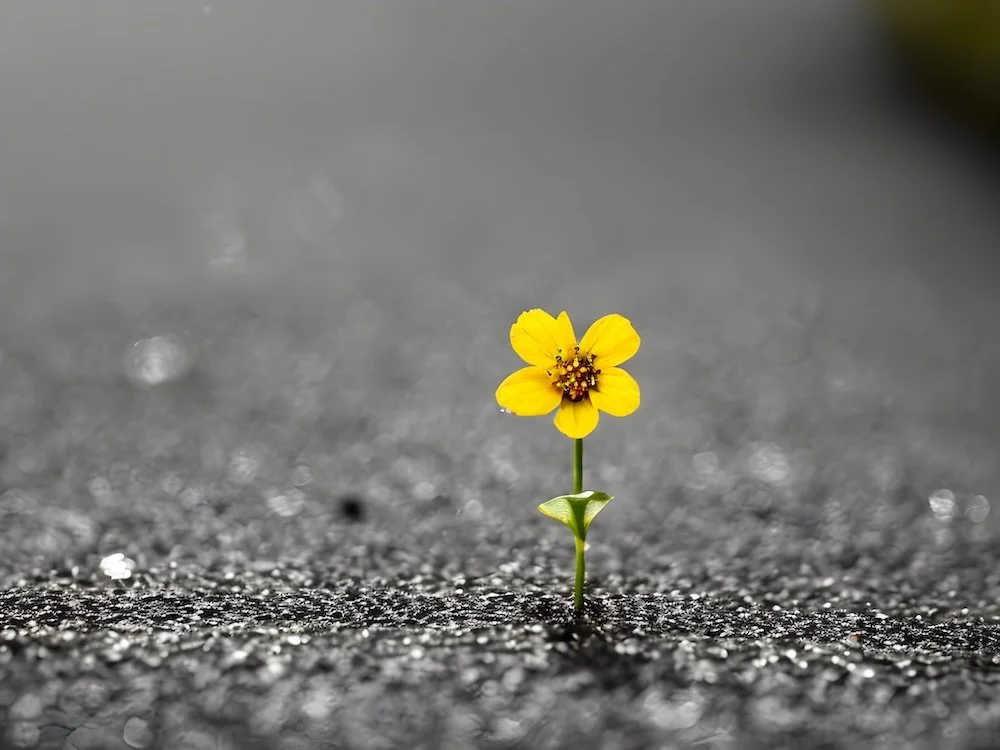
The Dumpster Fire of 2025 is coming to an end. We can hope for a better 2026, but there will certainly be more natural and unnatural disasters near and/or far in the upcoming year. Although we can’t control what happens, we can develop an increased capacity for managing and responding to it so that we can move through and away without being flattened.
The American Psychological Association defines resilience as
“The process and outcome of successfully adapting to difficult or challenging life experiences, especially through mental, emotional, and behavioral flexibility and adjustment to external and internal demands. ”
It’s important to note that resilience is not about a person’s innate ability to withstand stress. To the contrary, resilience is a skill that can be developed.
It’s also important to note that resilience is not about avoiding trauma or refusing to feel the pain of loss and adversity. Instead, it it the ability to experience trauma, feel the pain and loss, and move through it.
Resilience Factors
The APA identifies the factors that determine a person’s resilience, especially
their perception of the world around them and the way they engage with it,
the availability of supportive resources, and
access to strategies for coping.
World View
Take a look at your philosophy of life.
Do you have an adversarial relationship with the world around you? Do you feel like the universe is punishing you or out to get you?
Are you mistrusting of others?
Do you catastrophize?
Do you feel targeted or victimized even though you are not (if you are actually being victimized, that is a different matter, and you need to get help).
Do you resist change?
Do you feel helpless?
Do you feel that what you don’t know can’t hurt you?
Try instead to do the following:
Consider whether things that happen are actually only happening to you or are experiences shared by many.
Build relationships with healthy, trustworthy people.
Get away from cruel people who deliberately target and victimize you.
Try to think differently about change—try to see it as an opportunity instead of a disruption.
Recognize what you can control. For example, although you can’t control the weather, you can control the readiness of your household.
Learn from your experiences. Look at each experience as a learning opportunity.
Resources
To increase resilience, gather resources. These can include emergency readiness supplies, partnerships with people and organizations, training and other sources of information, personal relationships, and participation in activities and organizations that support your health and well-being.
For example, consider joining a Bainbridge Prepares Team. Benefits include forming relationships with like-minded people, developing your skills in a particular area of interest, and increasing your confidence and sense of agency.
Take one of our training classes. Watch our events calendar for upcoming opportunities. The calendar will be updated soon for 2026.
Strategies
There are many strategies to increase resilience. Some generally effective ones are to
Increase your knowledge and skills.
Build better relationships. Intereact with positive, energetic people who see you and support you.
Don’t avoid seeing or feeling reality. But also don’t get trapped in negative thinking. The trick is to walk the path between avoidance and wallowing.
Try to do healthy things. Unhealthy behaviors can contribute to a lack of resilience.
Set goals and generally move toward them.
Don’t go it alone. Our relationships with the people, animals, and planet around us can increase our resilience, hopefulness, sense of purpose, and effectiveness.
Final Thoughts
Whatever 2026 holds in store, remember the following:
You are not alone.
There is always hope when people work together toward a common goal.
Caring about others is not a weakness but a strength.
Looking at reality and finding a way to deal with it is far healthier and more effective than avoidance.
There is nothing we can’t do if we work together with hope and a vision, by combining our resources, talents, skills, interests, and unique perspectives.