Protect Your Family and Home Against Wildfire
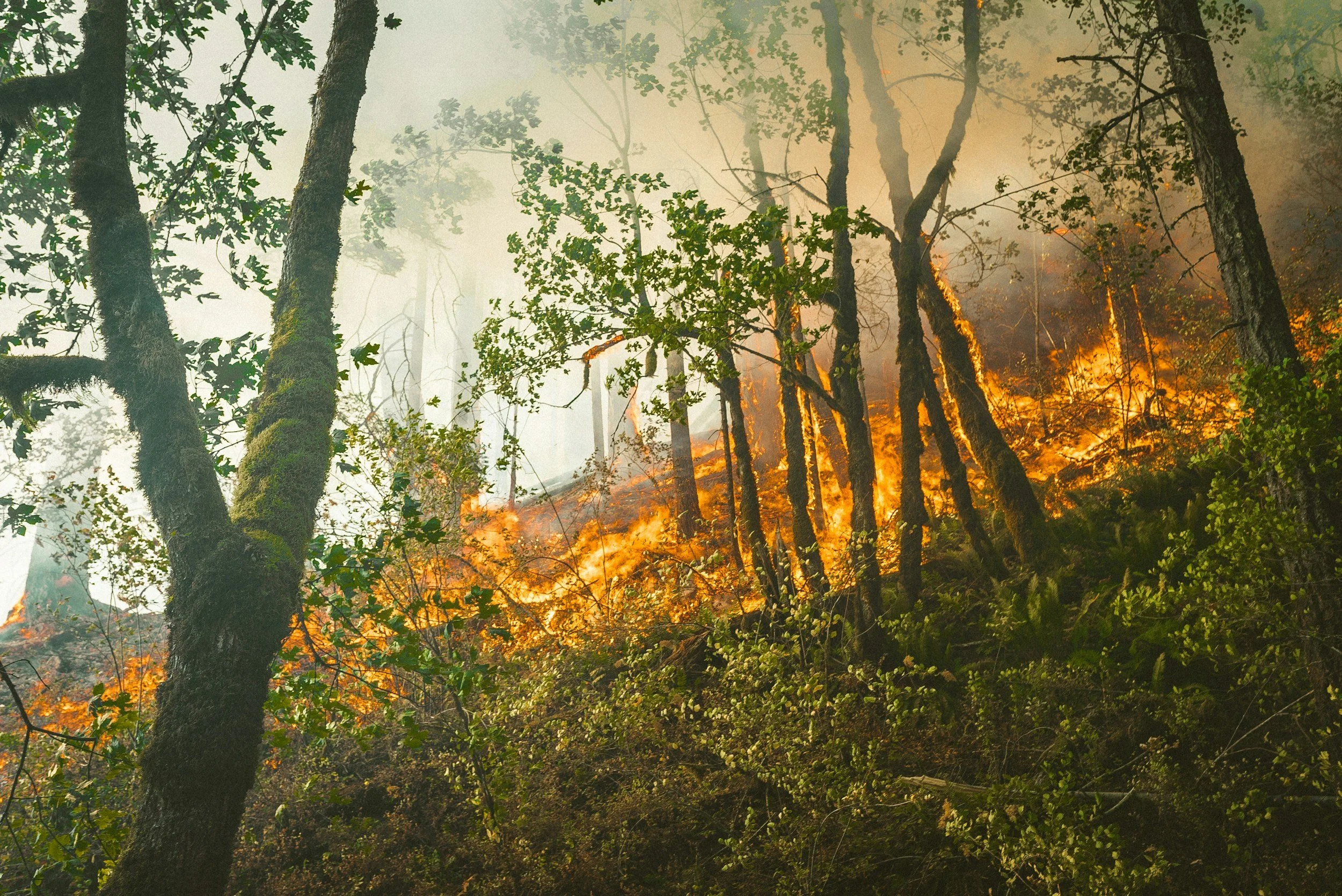
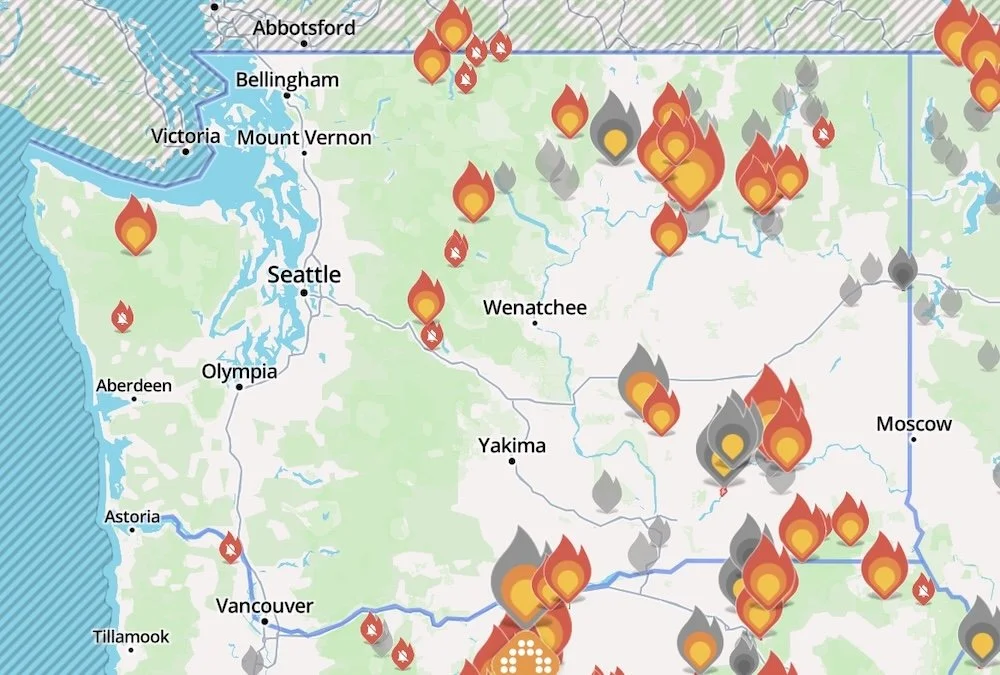
Although we had a dump of rain last week—0.60 inches—fire danger still lurks here and in neighboring communities. We’re four inches short of our average rainfall to date: 21.60 inches. Three major fires continue to burn in western Washington: The Mt. Tom Creek Fire in the Olympics and the Little Giant Fire and Three Queens Fire in the Cascades.
Critical Safety Actions
There are numerous things you can do to increase your safety in the face of wildfire threat. These are the four most important life-saving actions to take:
Sign up for Nixle alerts from the City of Bainbridge Island. Text text 98110 to 888777.
Know your fire evacuation zone.
Pack a go bag for every member of the household.
When the call for evacuation is issued, evacuate immediately. Take your animals with you.
Preparing Your Home
There are things you can do in advance of fire threat to reduce the chances of your home burning. Dr. Jack Cohen, a fire safety expert and researcher, recommends specific steps based on his targeted research about fire impacts on homes.
Cohen found that, during a wildfire, most homes catch fire from the ember storm created by the fire. He conducted a study by directing artificial ember storms at test houses and found that it is the debris around the houses that ignites first and then, through direct contact with the home, sets it on fire. A pine needle bed at the base of the test home ignited in 0.09 seconds after the start of the artificial storm. Pine needles in the gutter ignited within 1.02 minutes. Finally, the PVC gutter melted and collapsed in 2.43 minutes.
He also discovered that gabled roof vents are wide enough that firebrands can slip through the slats, igniting attics and roof crawl spaces. But a fine mesh screen on a gable vent reduces the likelihood by blocking out the embers.
Cohen learned that pine needles and debris on a roof don’t necessarily increase the likelihood of the roof burning even if that debris catches fire. But when you have a wall adjacent to that burning debris on a roof such as with multilayered roofs, then ignition is much more likely.
Outbuildings close to the home are also a concern if they are surrounded by debris.
So here are the key actions to take:
Remove pine needles, dead leaves, and other debris from decks, steps, railings, gutters, and around the foundation of your home.
Don’t stack firewood next to the building.
Make sure lawn furniture is fire safety rated (including cushions).
Prune away dead foliage adjacent to the building. Green bushes that are planted next to the house do not pose much of a problem. But dead branches in the bushes do.
Don’t park on dry grass.
Add a mesh screen to gabled roof vents.
Watch this video presented by the National Fire Protection Association that features Cohen and his findings. It provides important visuals to help you understand what he is talking about.
Puget Sound Energy
PSE has implemented a wildfire mitigation program that monitors real-time conditions and operates the electric system more conservatively during wildfire season. PSE might turn on Enhanced Powerline Settings (EPS) or use a Public Safety Power Shutoff (PSPS) during dangerous fire weather conditions.
The company recommends that, if you use a medical device in your home that relies on electricity, you apply for Life Support status on your account.
They also offer these general guidelines:
Maintain trees and other vegetation on your property and report danger trees near power lines to a PSE Arborist.
Get your free Wildfire Ready Plan from Washington Department of Natural Resources and take action to make your home and community more resilient.
Current Fire Regulations
The Bainbridge Island Fire Department reports that today’s fire danger is moderate. What that means is that
“fires can start from most accidental causes, but the number of fire starts is usually pretty low. If a fire does start in open, dry grassland, it will burn and spread quickly on windy days. Most wood fires will spread slowly to moderately. Average fire intensity will be moderate except in heavy concentrations of fuel, which may burn hot. Fires are still not likely to become serious and are often easy to control.”
We are currently in a Stage 1 Burn Ban:
General outdoor burning (weed torches, debris burning, yard waste burning) is prohibited.
All burning permits for ceremonial and agricultural fires are suspended.
Cooking fires and small recreational fires using standard cut untreated firewood, propane, or charcoal briquets are permitted.